A Guide to IGCSE Options in Malaysia (and What’s New for 2026)


The moment your child enters secondary school, every academic choice they’re given begins to shape the opportunities that they’ll have later, whether that be university admissions or future careers.
For many Malaysian families, the IGCSE has become the trusted pathway that bridges these crucial years to their future.
But with new subject options and evolving exam boards, many parents are asking: What exactly does the IGCSE offer today? And how do we choose the right subjects?
What is the IGCSE?
The IGCSE (International General Certificate of Secondary Education) is a worldwide qualification typically taken by students aged 14-16. Modelled after the UK’s GCSE system, it builds strong academic foundations that are recognised by universities and employers globally.
It’s also the most popular international curriculum in the world, offered at 30% of all international schools worldwide, and especially dominant in Asia, where 58% of the world’s international schools are located.
Over 2 million students sit for the IGCSE every year from all over the world!
👉 Read more about IGCSE in our IGCSE in Malaysia: All the Basics You Need to Know article!
What Exam Boards Are Available in Malaysia?
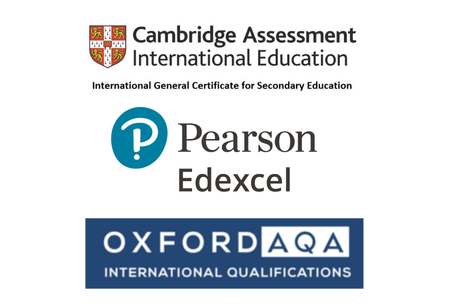
Malaysia offers three major IGCSE exam boards:
While they are all internationally recognised, each board offers slightly different syllabuses, assessment styles and grading systems.
Understanding the IGCSE Pathway
Most students take up to 6-10 subjects across two categories, core and electives:
Core subjects:
- English
- Mathematics
- Science (Combined/Triple Science)
Elective subjects (depending on school offerings):
- Business studies
- ICT/Computer Science
- Art & Design, Music, Drama
- Additional Languages and more
This flexibility allows students to build a balanced and customised academic portfolio.
IGCSE Subjects Available in Malaysia
Cambridge IGCSE offers 70+ subjects, including:
- Languages: Malay, Mandarin, Tamil, French, Spanish
- Humanities: Geography, History, Global Perspectives
- Business/Tech: Accounting, Economics, ICT, Computer Science
- Arts/Design: Art & Design, Music, Design & Technology
Pearson Edexcel offers 37 subjects, including:
- Business: Accounting, Commerce, Economics
- Languages: French, Spanish, Mandarin
- Humanities & Islamic Studies
OxfordAQA offers a growing list of GCSE and International GCSE subjects that mirror the UK structure.
Parents should review each school’s specific list or check the British Council website for availability.
What’s New for 2026: Exciting IGCSE Subjects Arriving in Malaysia!

The IGCSE landscape is evolving, and 2026 brings some of the most exciting subject additions yet. These new options give students the chance to explore modern fields, niche interests and globally relevant skills that go far beyond the traditional classroom.
Marine Science 🐟
Dive into ocean ecosystems, marine conservation and real-world environmental issues. Perfect for future biologists, environmentalists or students passionate about the planet.
Psychology 🧠
A long-awaited addition! Students can now explore human behaviour, mental processes and real-life case studies; an excellent foundation for future studies in psychology, counselling or social sciences.
Statistics 📊
With data shaping every industry today, this subject gives students an early advantage in analytics, AI, finance and research-driven fields.
Japanese (Foreign Language) 🍥
With Japan’s growing influence in technology, animation and global business, learning Japanese opens opportunities in culture, career and international communication.
Vietnamese (Foreign Language) 🌏
A fresh option reflecting Southeast Asia’s growing economic importance, perfect for students interested in regional studies and multicultural skills.
Arabic (Graded 9–1) 🕌
A modern, globally relevant language option that supports students interested in Islamic studies, international relations and cross-cultural communication.
English as an Additional Language (EAL) 🖋️
A supportive new pathway tailored for students developing strong English foundations, helping them transition into mainstream IGCSE subjects confidently.
👉 You can read the full list here!
What If Your Child Wants a Subject the School Doesn’t Offer?
Some schools may not offer niche subjects like Psychology, Marine Science, or certain languages.
In this case, students can register as private candidates through the British Council Malaysia.
Parents should contact the British Council to confirm:
- Available subjects
- Exam centre locations
- Fees
- Registration dates
- Result collection process
And yes, students can mix Cambridge and Edexcel subjects if registering independently.
Choosing the Right International School
When comparing schools, parents should consider:
- Exam board - Does the school use Cambridge, Edexcel, or OxfordAQA?
- Subject offerings - Look for strengths aligned with your child’s interests. (eg: science/arts/language, etc.)
- Teacher expertise - Experienced teachers matter, especially for practical subjects like sciences, ICT and design technology.
- Flexibility - Some schools allow students to sit for external subjects that aren’t offered internally.
Find schools that offer IGCSE here: 8 Schools Offering IGCSE In Malaysia
Parent Insights: Navigating the Private Candidate Route for IGCSE

For some families, the traditional school-based IGCSE pathway may not be the best fit. We spoke to a Malaysian parent, Latisha Merican, who has guided her two children, Shiraz and Mirza, through the private candidate route.
Why They Chose the Private Candidate Path
For this family, flexibility was key.
“Shiraz thrived through a learning centre that could accommodate a different study rhythm,” Latisha explained.
“Mirza, on the other hand, was deeply involved in bushcraft, taekwondo, ninjutsu, fitness classes and regular tournaments, which mostly happened on weekdays.”
Being private candidates allowed the boys to study around their interests.
Mirza even added new activities such as stand-up paddling and sports science while preparing for his IGCSEs. “The physical activities helped when he felt stressed out,” she said.
How They Found Out About the Private Registration Option
For Shiraz, the learning centre handled the entire registration and exam process.
While Mirza, it was word of mouth. Fellow parents and the principal of Shiraz’s learning centre shared their advice and experiences. From there, Latisha looked for a nearby exam centre, which later proved helpful when dealing with schedule changes.
Choosing an Exam Board & Subjects
Both children sat for the Cambridge IGCSE, mainly because their learning centre offered it.
“Besides that, it was more accessible, and tutors were more readily available,” she added.
Shiraz took the main subjects offered by his learning centre: Mathematics, O-Level English, Malay as a second language, Physics, Biology, Chemistry and Business Studies.
Meanwhile, Mirza chose subjects entirely based on his passions: Mathematics, Additional Mathematics, Physics and Computer Science. Fortunately, all were available at a nearby exam centre.
How They Prepared for Exams
For many private candidates, the exam season can feel like stepping into a completely new world, one without the familiar support system of a school environment. Everything from registration to exam-day logistics becomes an independent journey.
Shiraz studied on his own after classes at the learning centre, often revising on the MRT. “The background noise and the train’s movement helped him focus,” Latisha explained.
His exam process was also smooth because the learning centre handled almost everything for him.
Mirza, on the other hand, relied on his innate understanding of the subjects he loved, supplemented by reading. As Latisha puts it, “Everything was already in his head.”
Mirza sat for exams across three sittings over 18 months. “Registering for the first time was a bit scary, but later attempts became easier,” Latisha recalled.
“The biggest challenge was communication with exam centres, especially when there are unexpected changes. So, make sure to register at an exam centre nearby.”
Besides that, Latisha shared that there were surprisingly few challenges. “Whatever help Shiraz needed, he could reach out to his principal and teachers, and the information required for the exam was emailed to the parents.
“Mirza also had wonderful tutors who guided him, and as a stay-at-home mom, I could support him in other ways, such as driving him to classes and exam centres.”
For the boys, one unexpected perk of being private candidates stood out: the freedom to dress comfortably. No uniforms, no formality. Just neat grooming, comfortable clothes, and a jacket.
It made exam days feel less intimidating and a little more like their own.
Advice for Parents Considering the Private Candidate Route
Latisha shared that while the private candidate pathway offers wonderful flexibility, especially for students exploring niche subjects, it does require a lot of hands-on involvement from parents.
“You’ll need to consider things like one-to-one tutoring vs group classes, online vs physical lessons, and how much time, cost, and travel your family can manage,” she explained.
“You have to find tutors to suit your child, as children learn and understand differently.”
For Mirza, one-to-one tutoring worked brilliantly because it let him progress quickly in subjects he was strong at. However, it can get costly.
Parents also need to stay on top of syllabus updates, exam deadlines, and available exam centres.
But beyond logistics, there’s an emotional side too. One-to-one tutoring can feel isolating for some children, so it helps to balance academics with group activities, clubs, or sports to keep them socially engaged.
Final Thoughts for Parents
The IGCSE is more than just a qualification. It’s a launching pad for your child’s future.
With exciting new subjects coming in 2026 and the option to take niche courses as a private candidate, students can explore their passions, build on their strengths, and create a pathway that sets them up to thrive in school, university, and beyond.
Recent Articles
- UPM/UiTM 2026 study: 26.7% of toddlers with excessive screen time show developmental concerns
- 7 Questions to Ask a Principal That Aren't in the Brochure
- A Psychiatrist’s View: Why Malaysian Teachers Need Better ADHD Training
- How to Help Your Child "Ask the Right Questions"
- How to pick the right enrichment class for your child's personality and learning style