PISA 2025 Malaysia Results: Maths Scores Continue to Fall – What Parents Need to Know

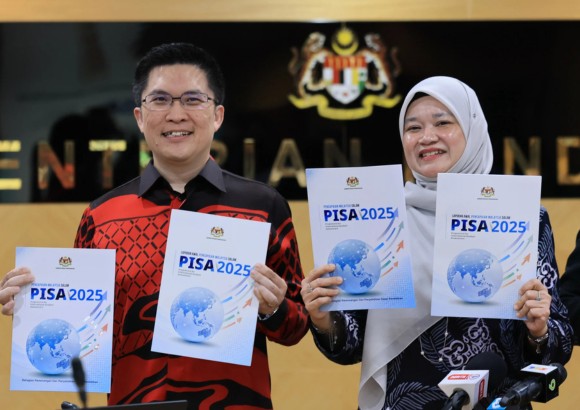
Malaysia’s latest PISA 2025 results show a mixed picture of student performance. While Malaysian students improved in Science and Reading, Mathematics performance continued to decline, highlighting a growing challenge for the education system.
What Is PISA and Why Does It Matter?
The Programme for International Student Assessment (PISA) is an international assessment conducted by the Organisation for Economic Co-operation and Development (OECD) that measures how well 15-year-old students can apply knowledge in real-world situations.
Unlike traditional examinations that focus mainly on memorisation, PISA evaluates students’ ability to:
- Apply mathematical concepts
- Interpret information
- Solve problems
- Think critically
The results provide insights into how education systems prepare students for future challenges.
Malaysia’s PISA 2025 Scores at a Glance
Malaysia's improvement in Science and Reading shows slight progress in some learning areas. However, Mathematics remains the biggest challenge, with Malaysia scoring 397 points against an OECD average of 463. Across the three core subjects combined, Malaysia's average score is 403 points, compared with an OECD average of 469 — a 66-point gap.
The assessment also highlights a wider learning gap. About 42.3% of Malaysian students scored below Level 2 proficiency across Science, Reading and Mathematics combined, compared with an OECD average of 19.7%. Only 0.8% of Malaysian students reached the highest performance levels (Level 5/6), compared with the OECD average of 11.9%.
How Does Malaysia Compare With Other ASEAN Countries?
Malaysia remains behind several neighbouring education systems in the core PISA subjects.
Singapore continues to be one of the world’s strongest performers, particularly in Mathematics and Science.
More surprisingly is that Thailand and Vietnam have also outperformed Malaysia.
Malaysia recorded a positive result in Computational Problem Solving, where it was among only six economies globally where students performed significantly better than expected based on their Science performance.
This suggests Malaysian students may have strengths in applying knowledge to solve complex problems, even as traditional Mathematics performance requires improvement.
Why Is Malaysia’s Mathematics Score Declining?
The country’s Mathematics score has fallen from 446 points in 2015 to 397 points in 2025, a decline of 49 points over a decade.
Education experts highlighted several dire consequences:
Weak mathematical foundations
Students who struggle with basic concepts such as fractions and arithmetic may face greater difficulties as they progress to advanced topics.
Focus on memorisation instead of understanding
Experts have raised concerns that students may rely too heavily on memorising procedures rather than developing deeper reasoning and problem-solving skills.
Learning gaps accumulating over time
Challenges that begin in earlier years may become more difficult to address when students reach secondary education.
What Is Malaysia Doing To Improve Mathematics?
Following the PISA 2025 results, the Ministry of Education announced the Malaysian Mathematics Education Transformation Plan 2026–2035 as part of targeted interventions to address weaknesses in Mathematics performance.
Education Minister Datuk Seri Fadhlina Sidek acknowledged that improving Mathematics outcomes requires collaboration between schools, families and communities.
While detailed implementation plans are still being developed, the initiative signals a long-term effort to strengthen Mathematics education in Malaysia.
What Can Parents Do To Support Their Children?
The PISA 2025 findings highlight that families play an important role in supporting learning outcomes.
Parents can help by:
Strengthening foundations early
Instead of waiting until secondary school, parents should identify early signs of difficulty with basic mathematical concepts.
Encouraging problem-solving thinking
Rather than focusing only on correct answers, parents can ask:
- “How did you solve this?”
- “Why does this method work?”
This helps children develop reasoning skills.
Supporting healthy digital habits
The report also highlighted concerns around cyberbullying, with Malaysian students reporting higher exposure compared with the OECD average. Supporting children’s online wellbeing can contribute to a healthier learning environment.
Final Thoughts
Malaysia’s PISA 2025 results present a mixed picture. While Science and Reading have improved, Mathematics remains a major challenge requiring long-term solutions.
For parents, the key takeaway is that educational success is not only about examination scores. Helping children build curiosity, confidence and problem-solving skills will be essential in preparing them for the future.
Recent Articles
- Which Curriculum Can You Get at an International School Under RM30,000? (2026 Guide)
- International School Fees in Malaysia: Budget vs Mid-Tier vs Premium - What Are You Paying For?
- Hidden Fees at Budget International Schools in Malaysia: What Tuition Does Not Cover
- Is Preschool Compulsory in Malaysia? What the 13MP Proposes
- International Schools in Klang Valley With Tuition Fees Below RM30,000 in 2026