Is a More Expensive International School in Malaysia Worth It?

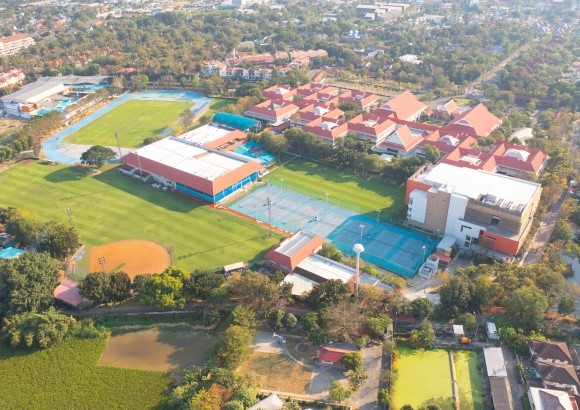
Do premium international schools in Malaysia offer more? Compare fees, teachers, learning support, facilities and hidden costs before paying extra.
Sometimes, but not always.
A more expensive international school does not automatically mean your child will get a better education.
Higher fees often pay for what's around the classroom: smaller classes, specialist teachers, learning support, better facilities, more activities, and stronger university counselling.
The real question for parents is:
Will your child actually use and benefit from those extras?
How Much Do International Schools in Malaysia Cost?
There is no official government definition of a “budget”, “mid-tier” or “premium” international school, but School Advisor generally groups annual tuition like this:
Some premium schools charge well above RM100,000 a year, especially in the secondary years.
For example, 2026/27 annual tuition reaches RM122,370 at Alice Smith School , RM126,870 at Garden International School and RM143,400 at ISKL , depending on year level. These figures exclude some additional charges and applicable taxes.
That is why parents should compare more than the school name.
What Are You Actually Paying More For?
Higher fees can go towards:
- more teachers and smaller classes;
- specialist learning-support staff;
- internationally recruited teachers;
- sports coaches and arts specialists;
- science labs, theatres and sports facilities;
- broader extracurricular programmes; and
- dedicated university and careers counselling.
A mid-tier school may offer many of these things too, just on a smaller scale.
So instead of asking, “Does this school have a swimming pool?” , ask:
“How often will my child actually use it?”
A beautiful facility has little value if it is rarely part of your child's school day.
Do Premium Schools Offer Better Learning Support?
For some families, this can be one of the strongest reasons to pay more.
A child with dyslexia, ADHD, autism or other learning needs may benefit from access to specialist teachers, teaching assistants, individual plans and small-group support.
But parents should never assume a higher fee automatically includes better support.
Ask the school:
- What happens if my child starts struggling?
- Who provides the support?
- Is it included in the school fees?
- Are there additional charges?
In some cases, specialist programmes cost extra. ISKL, for example, lists an additional annual fee for its Life-Centered Education service.
Does Paying More Mean Better Teachers?
This is harder to judge during a campus tour, but it matters.
Teacher salaries, recruitment and retention can make up a large part of a school's costs. ISKL states that around 70% of its revenue goes towards recruiting and retaining international educators.
Parents should therefore ask:
- How experienced are the teachers?
- How long do they usually stay?
- Are they trained in the curriculum?
- How much professional development do they receive?
A modern campus cannot make up for constant teacher turnover.
Do Premium Schools Get Better Academic Results?
Some premium schools report very strong results, but parents should be careful about comparing headline grades alone.
Alice Smith School reported that 69% of its 2026 IGCSE grades and 50% of A-Level grades were A-star to A. The audit also found that the school publishes a value-added score, which measures how much students perform above their predicted results.
That can be more useful than simply asking how many A grades a school achieved.
A school with strong students may naturally produce strong results. What parents really want to know is:
How much progress did students make while they were there?
What About Sports, Arts and Extracurricular Activities?
This is another area where premium schools may offer more.
Your child might have access to specialist sports coaching, productions, music, robotics, debate or international competitions.
For a child who is serious about swimming, theatre or music, those opportunities could be valuable.
For a child who does not participate in them, you may be paying for facilities and programmes they rarely use.
Don't Forget the Costs Outside Tuition
Premium tuition is not always the final amount.
Parents may still need to budget for:
- registration and application fees;
- deposits;
- transport;
- meals;
- uniforms;
- examination fees;
- devices;
- trips; and
- selected extracurricular activities.
For example, Garden International School lists a RM20,000 registration fee for Years 1 to 13 , while ISKL lists a RM59,000 student registration fee for many new students.
That first year can therefore cost considerably more than the advertised tuition.
When Is Paying More Worth It?
Paying more may make sense if your child:
- needs specialist learning support;
- benefits strongly from smaller classes;
- is serious about sport, music or performing arts;
- needs extensive university guidance; or
- will regularly use specialist facilities.
It is harder to justify when the main difference is a prestigious name or facilities your child will barely use.
Before choosing, ask one final question:
“If I am paying tens of thousands of ringgit more every year, what will actually be different for my child?”
If the answer clearly matches your child's needs, the extra cost may be worth it.
If not, a good mid-tier or lower-fee international school may give your child everything they actually need.
Recent Articles
- Is a More Expensive International School in Malaysia Worth It?
- Magdalen College School Oxford Partnership Expands British Education in Sunway City
- PISA vs SPM: Are Malaysian Students Actually Learning?
- What Are the Most Affordable International Schools in Penang?
- What Are the Most Affordable International Schools in Ipoh?