Is Malaysia Falling Behind Its ASEAN Neighbours in PISA 2025?

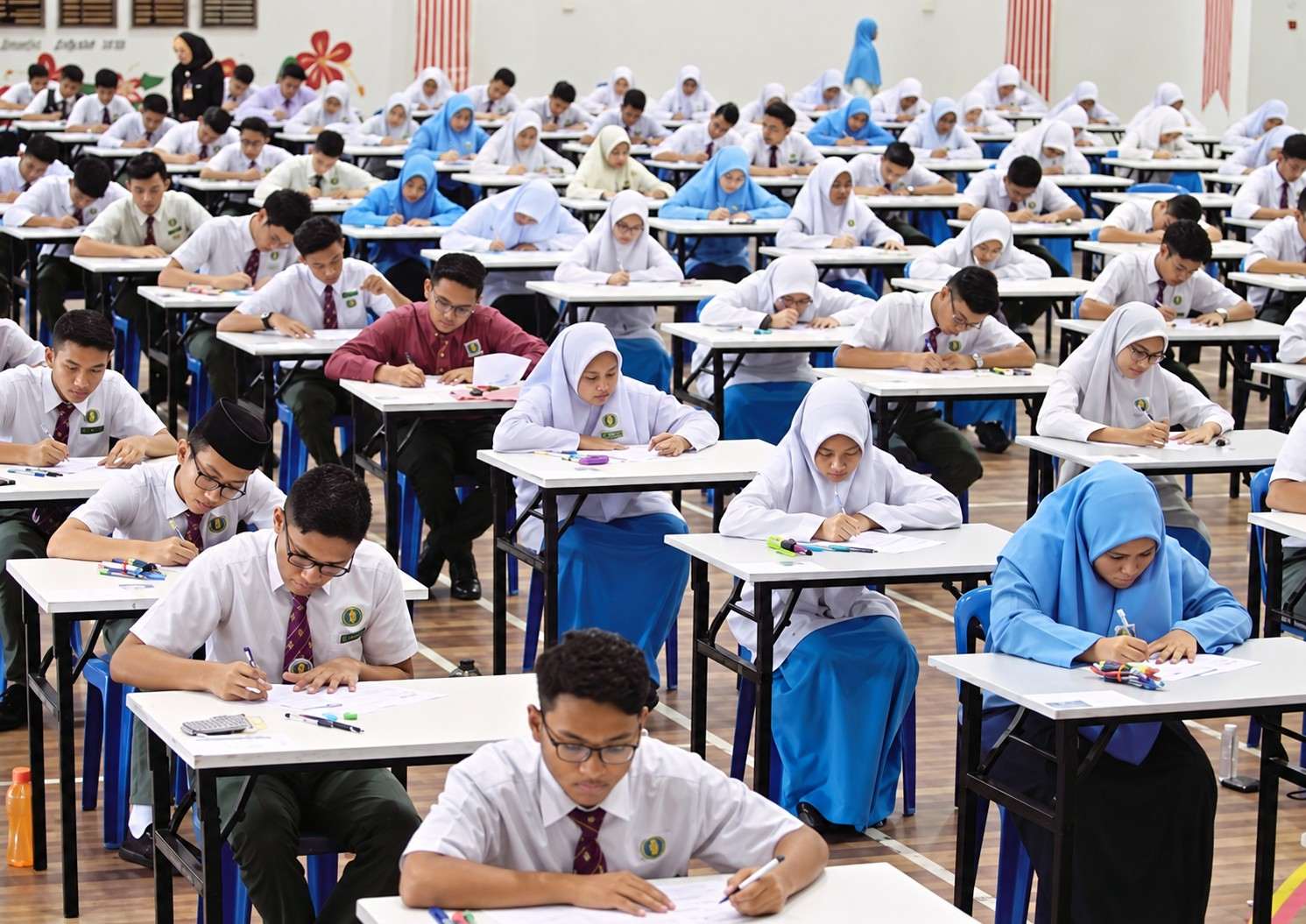
The short answer: it depends on the subject. Malaysia ranks fifth among ASEAN countries for Science and Mathematics, but third in Reading and Computational Problem Solving. So, which countries are ahead of Malaysia, how big are the gaps, and what does the comparison tell us?
Where Does Malaysia Rank Among ASEAN Countries?
The PISA 2025 results show that Singapore leads ASEAN across the three core subjects of Science, Reading and Mathematics. The remaining spots are filled by Vietnam, Brunei, Thailand and Malaysia.
Malaysia recorded 1 point more in Reading over second place Vietnam and third place Thailand, but ranked fifth among participating ASEAN countries in Science and Mathematics. However, Malaysia is ranked third in Computational Problem Solving, behind Singapore and Brunei.
Why Are These ASEAN Countries Performing Better?
The PISA scores do not provide clear reasons for Malaysia’s low performance. Hence, it is worth looking at some differences within the education systems of our neighbours.
Singapore: A Long-Term Focus on Teacher Preparation
One of Singapore’s structural differences is teacher preparation. Singapore trains teachers through the National Institute of Education (NIE), with teacher preparation closely connected to professional development and the wider education system.
Malaysia also has a centralised teacher-training system through the Institut Pendidikan Guru Malaysia (IPGM), but training is delivered across 27 campuses. Malaysia's challenge is more complex because it has experienced teacher oversupply in some areas while facing shortages in other locations, particularly in the subjects of Mathematics and Science.
The comparison puts into focus the importance of teacher preparation, specialisation and deployment.
Brunei: Consistent Improvement and Structured Teacher Training
Brunei has also performed above Malaysia across the three core subjects. One difference worth examining is its structured approach to teacher preparation through the Sultan Hassanal Bolkiah Institute of Education (SHBIE), alongside its longer-term education reforms under SPN21.
Brunei has been consistently improving on its PISA performance, suggesting that changes in education outcomes can take place over several years rather than through a single intervention.
Vietnam: Strong Performance Without One Simple Explanation
Vietnam is perhaps the most interesting comparison for Malaysia. Its students scored substantially higher than Malaysian students in Science and Mathematics, despite having a Reading score almost identical to Malaysia's.
Teacher quality, curriculum, student effort, family expectations and broader education practices have all been examined as possible contributors.
What Does The ASEAN Comparison Tell Us About Malaysia?
The most alarming finding from the ASEAN comparison is not that Malaysia ranked fifth in Mathematics. It is that Malaysia's Mathematics performance has been weakening over a much longer period.
Malaysia scored 446 points in Mathematics in PISA 2015. By PISA 2025, that had fallen to 397 points, a 49-point decline over ten years.
The decline becomes more concerning when viewed alongside Malaysia's neighbours. Malaysia is now 46 points behind Vietnam, 38 points behind Brunei and 10 points behind Thailand.
This raises a bigger question: what happens if this decline continues?
Mathematics is a core school subject. It underpins areas such as science, engineering, technology, data analysis, finance and other fields requiring quantitative reasoning. It is not surprising that persistent weakness in mathematical foundations can therefore make it harder for students to progress into more advanced learning and technical fields.
The concern is particularly relevant because PISA measures whether students can apply mathematical knowledge to real-world problems, rather than simply recall formulas or procedures.
If students continue to struggle with foundational concepts and mathematical reasoning, the implications may extend beyond examination performance. Students may find it harder to approach unfamiliar problems, interpret quantitative information and develop the skills expected in increasingly technical study and work environments.
However, the PISA results should not be interpreted as proof that Malaysia's future workforce will necessarily become less competitive. A ten-year decline is a warning signal, not a prediction.
There is evidence that Malaysia's performance is not uniformly weak. Its Reading score of 393 places it third among participating ASEAN countries, so too does the 484 score in Computational Problem Solving.
The critical issue, therefore, is whether Malaysia can reverse the downward trend in Mathematics before the gap with our ASEAN neighbours becomes even wider.
There is no doubt the Education Ministry must relook into its delivery of education. For parents, the challenge is to build strong foundations, encourage children to explain their reasoning and develop confidence in solving unfamiliar problems.
Malaysia's PISA 2025 Mathematics result should therefore be viewed less as a ranking and more as a warning about a decade-long trend that needs immediate attention.
Recent Articles
- Is Preschool Compulsory in Malaysia? What the 13MP Proposes
- International Schools in Klang Valley With Tuition Fees Below RM30,000 in 2026
- Affordable International Schools in Malaysia With Tuition Fees Under RM30,000 in 2026
- Is Malaysia Falling Behind Its ASEAN Neighbours in PISA 2025?
- PISA 2025 Malaysia Results: Maths Scores Continue to Fall – What Parents Need to Know