AISM Students Who Dream Big and Build Bigger

 ▶
▶
Step into Australian International School Malaysia (AISM) and you quickly notice that learning here does not sit quietly in rows of desks. Classrooms hum with conversations, prototypes, creative sketches, and rehearsals. The atmosphere feels like a live exhibition of ideas, built around a curriculum that values reflective and visionary thinking.
At the heart of this is the New South Wales Higher School Certificate (HSC), an internationally recognised pre-university programme. Unlike systems that measure success almost entirely through final exams, the HSC splits assessment into two equal parts. 50% comes from school-based assignments, and 50% comes from external examinations. This structure encourages students to grow through research, reflection, and long-term projects, not just short bursts of memory recall.
Design and Technology teacher Sherry Waleed sees the HSC as a journey rather than a final hurdle. In her classroom, the environment functions like a university design studio. Students discuss their ideas openly, critique one another’s work, and revise their designs over multiple cycles. She allows students the freedom to explore and experiment, but within a framework that teaches responsibility, problem-solving, and self-awareness. For her, assessment is more than a grade, because it becomes a metacognitive tool that helps students understand how they think, where they struggle, and how they can improve.
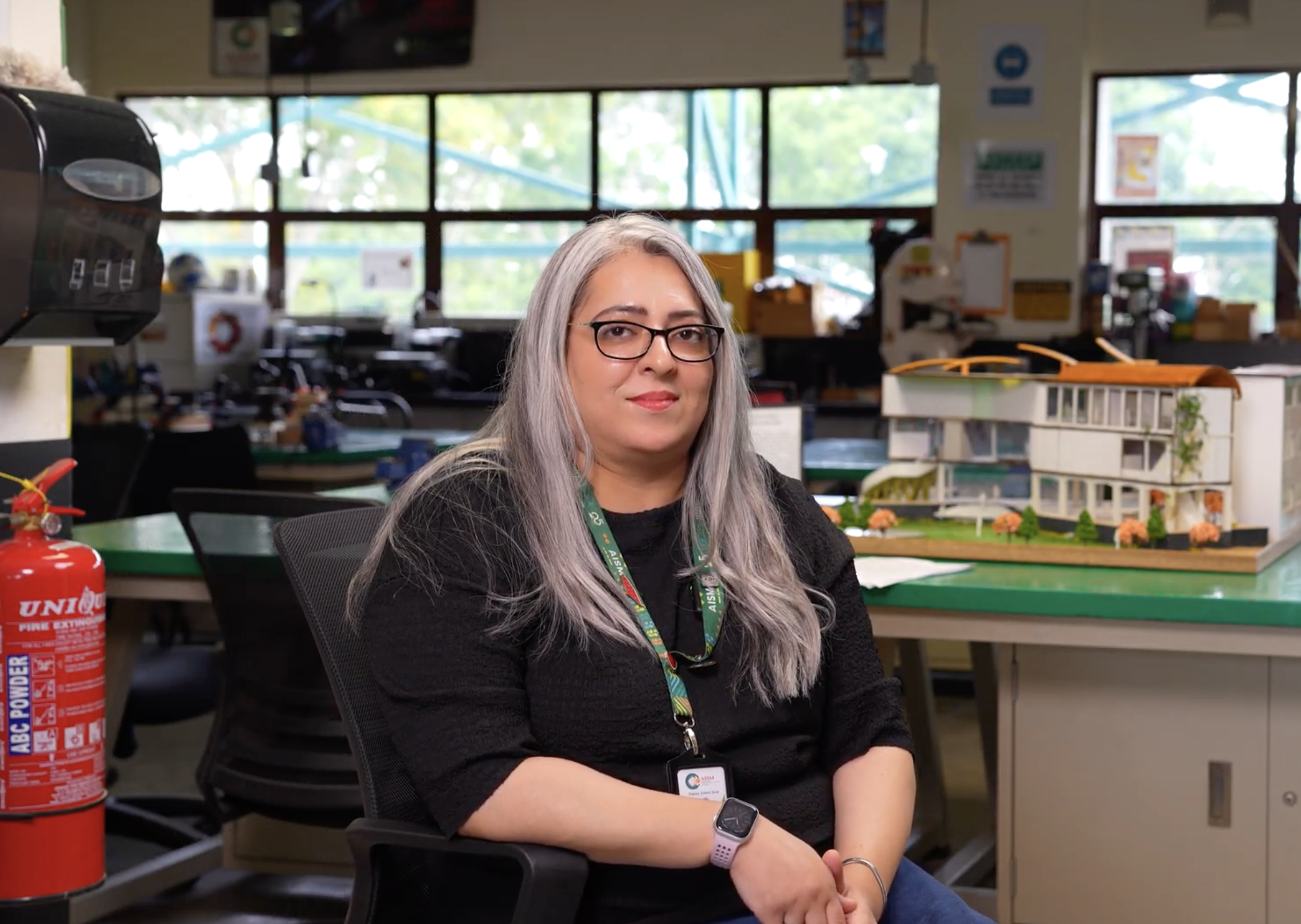
Design and Technology teacher Sherry Waleed.
Igniting Passions with Creativity
At AISM, students’ enthusiasm to do well is not something that needs sharpening at all. Here, students have the freedom to turn their passions into tangible, distinctly impressive projects.
School Vice Captain Kelly Moon, Class of 2025, is a powerful example. Her design project, a model of a connection bridge and study hub, started as a simple brief and evolved into something deeply personal. The process did not follow a neat, linear path. She endured repeated design and scientific failures; early versions did not work as expected, and materials did not hold as intended. What initially looked good on paper ended up falling apart in practice.
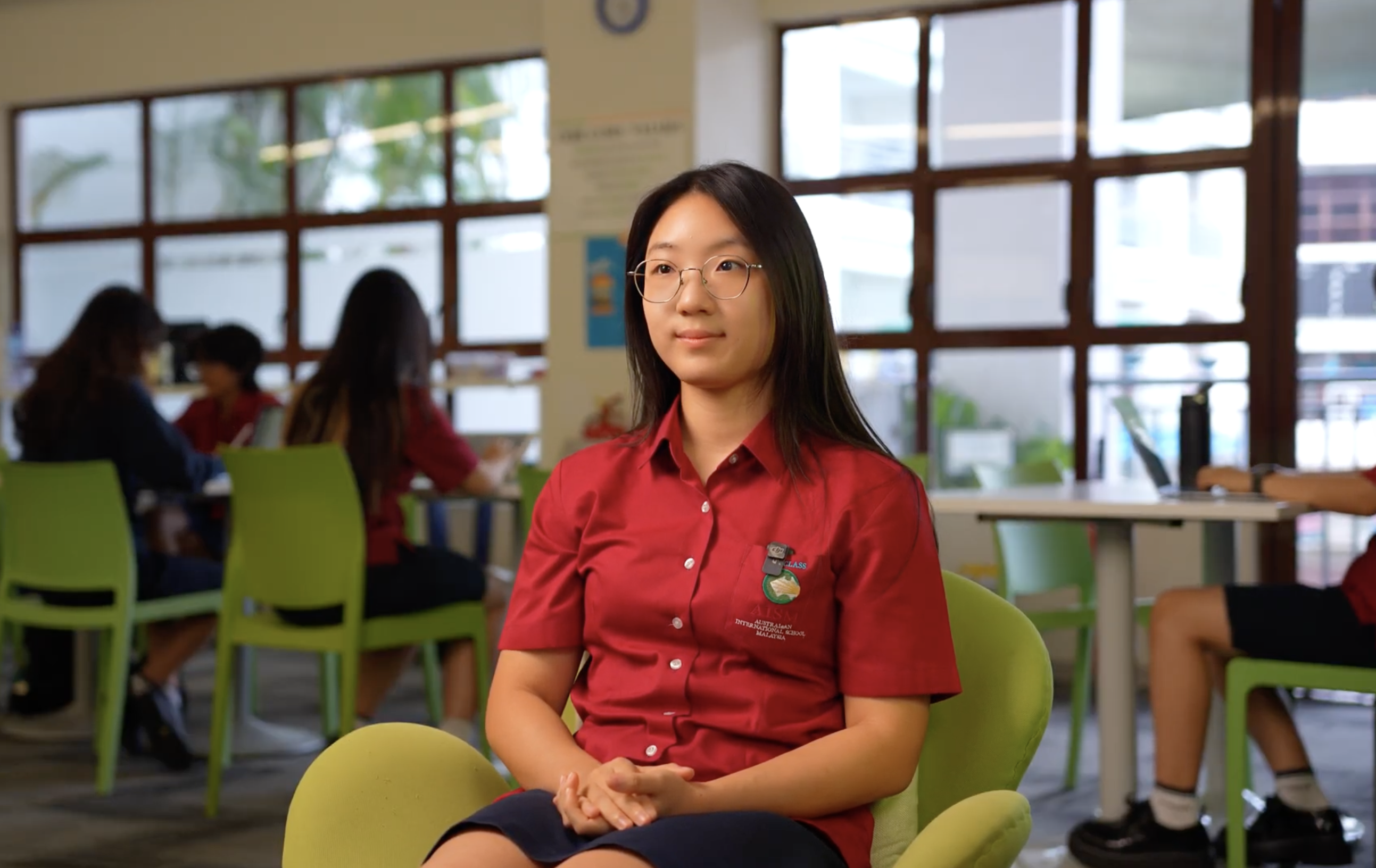
Student Kelly Moon, whose project got nominated for the prestigious SHAPE Award.
But instead of seeing these as dead ends, Kelly learned to treat each failed iteration as data. She tested new materials, revised measurements, and adjusted the function of her design. Over time, she developed a stronger instinct for how form and function interact. The result was a project that did more than fulfill the task. It expressed her resilience and willingness to push beyond what she thought she could do. Her work was eventually nominated for the prestigious SHAPE Award, an exhibition organised by the New South Wales government to showcase students’ projects in Design and Technology, Industrial Technology, or Textiles and Design. For her, the recognition mattered, but the real reward was the confidence she gained in managing complex workloads and trusting her own judgment.
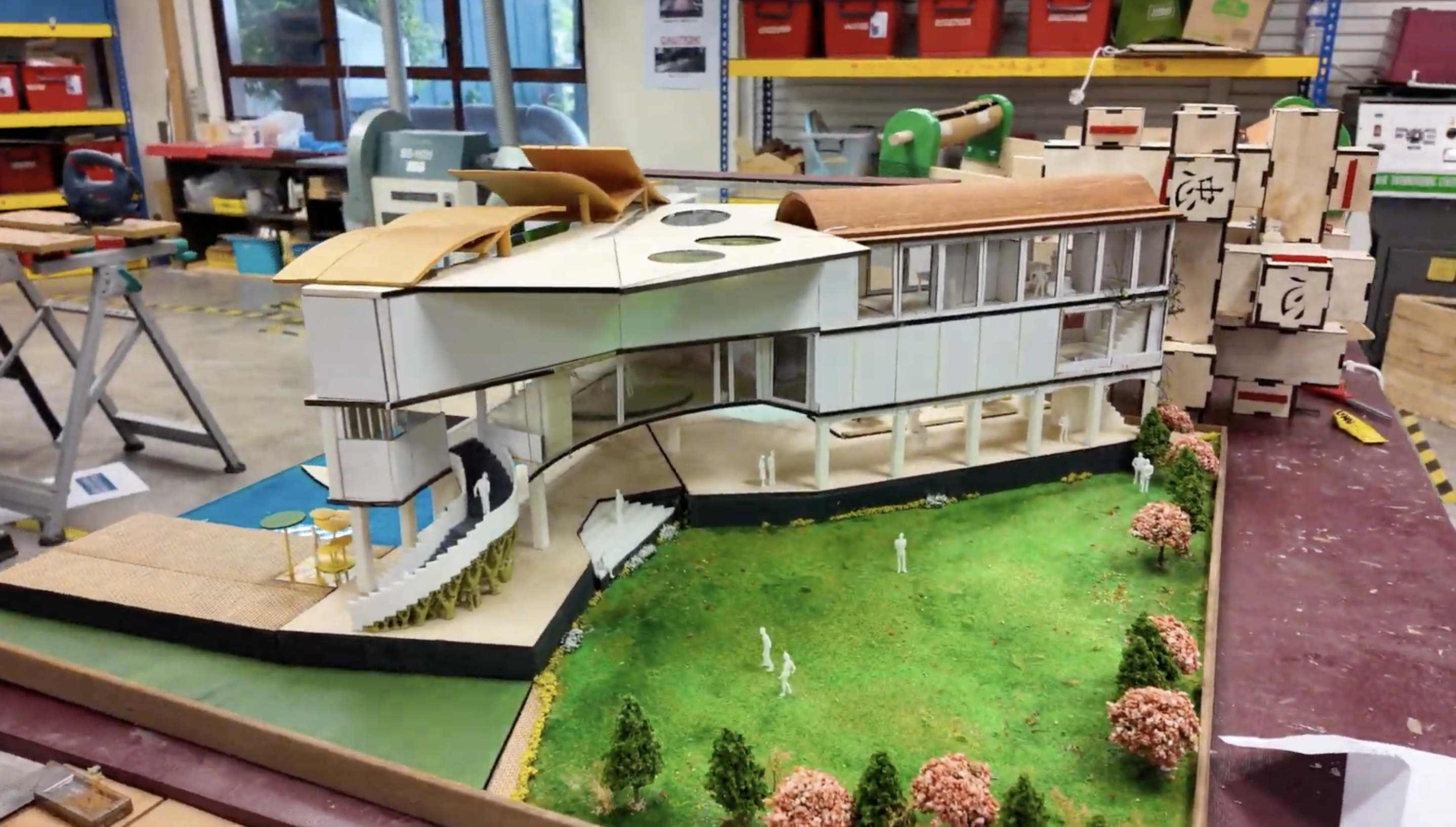
Kelly Moon’s model of a connection bridge and study hub.
In another corner of the school, graduate Jia En found her voice through the performing arts. Her HSC Drama performance brought together contemporary dance and the literary world of Virginia Woolf. Dance, she says, is a very central part of her life, so she knew she wanted to integrate modern movement and themes of contemporary life into her piece. She built a physical theatre performance that reimagined Woolf’s struggles for a 21st-century audience.
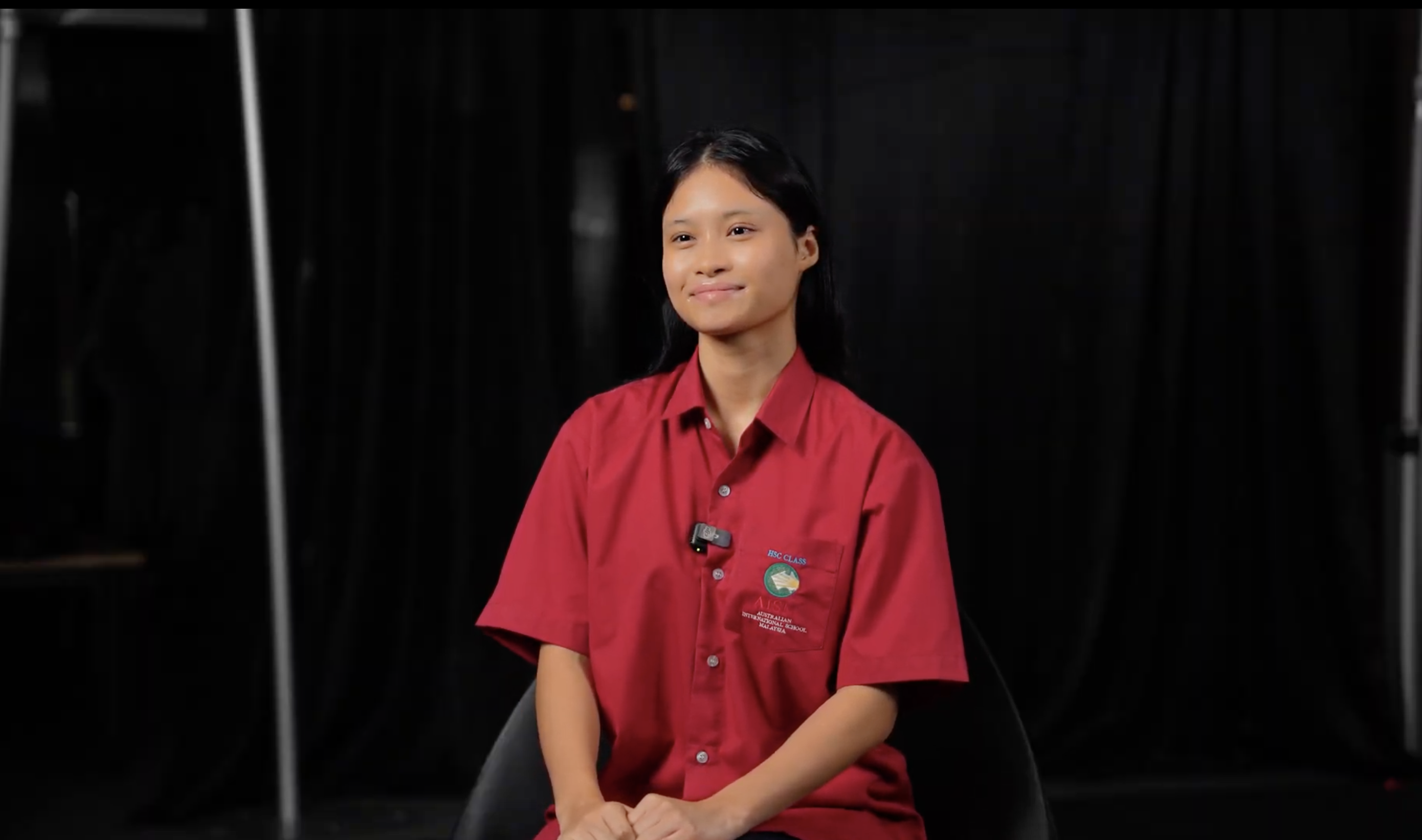
Jia En, AISM Graduate from the Class of 2025.
The depth of Woolf’s writing forced her to confront themes like mental health and existential conflict with maturity and care. This was not just about memorising lines. She had to ask herself how these themes should feel in the body, how they should sound in her voice, and how they should resonate with an audience that lives in a very different era. The process changed the way she moved, thought, and interacted with the world; she began to see how creative decisions always carry emotional weight.
Her commitment carried through to her university auditions. She recorded reels, refined choreography, and kept rehearsing despite an ankle injury. Her hard work paid off when she received an offer from the American Musical and Dramatic Academy (AMDA) in New York, along with a major scholarship. “I never really thought that I, as a small Malaysian girl, could get into New York City,” she confesses. But her journey at AISM had already prepared her to reach beyond her own expectations.
When she first entered the school, she had never even held a microphone. Years later, she leaves as an Arts Prefect and a confident performer ready to lead on stage and off.
For Yin Kai, school captain and graduate of class 2025, some of the most memorable learning experiences did not come from science or mathematics, but from history. Under the guidance of his teacher, Mr Webster, he completed a major assessment entitled “Echoes of the Vietnam War”.
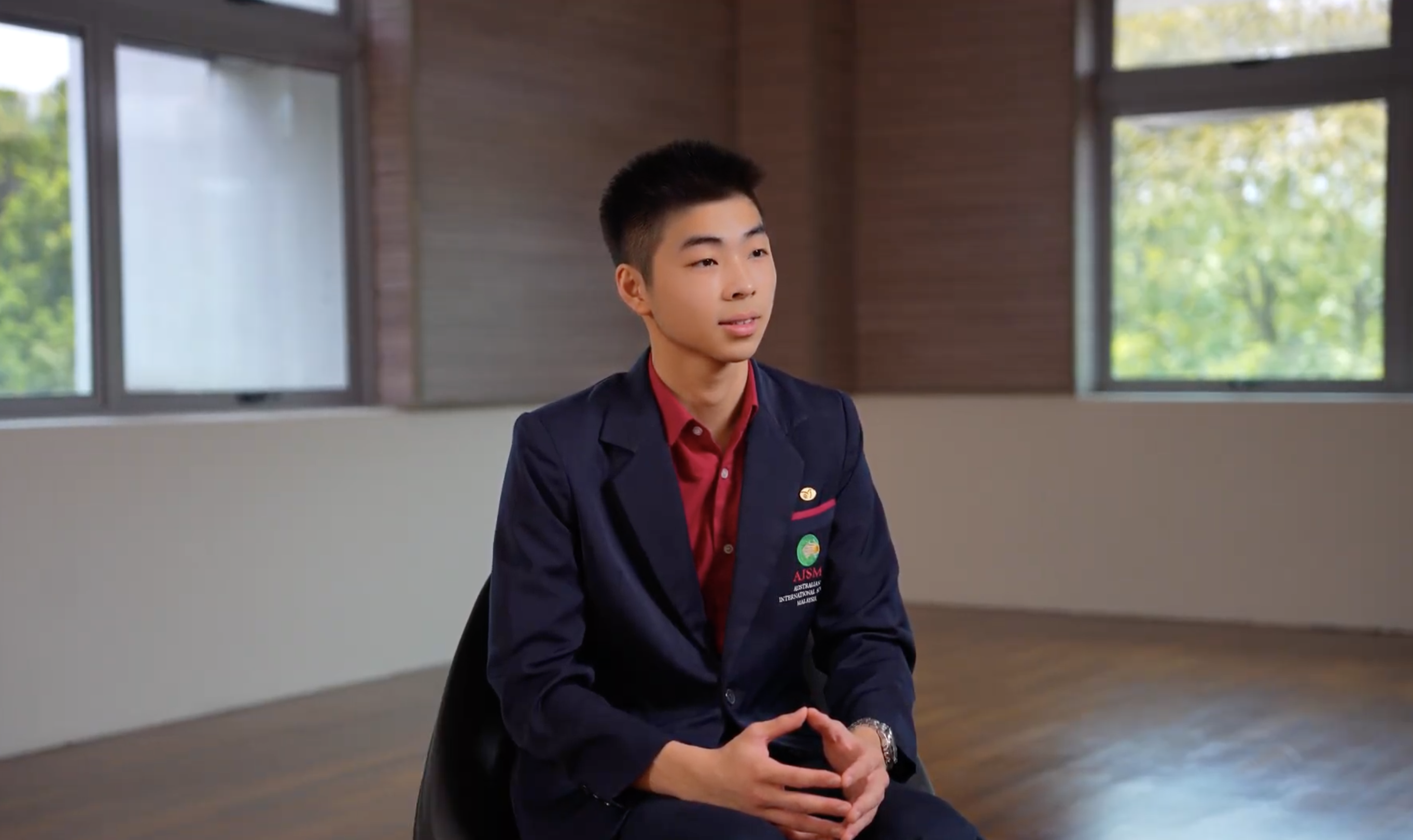
Yin Kai, School Captain and AISM Graduate from the Class of 2025.
As a photography enthusiast, Yin Kai chose to tell the story through images. He curated photographs from the Vietnam War and wrote detailed analyses explaining the context and significance of each shot. “I learned the importance of photography because gruesome photos were taken during the Vietnam War, which were sent back to America. When the Americans saw the photographs, they realised how terrible the war was, and that led the Americans to protest against the war, which ultimately led to the withdrawal of the Americans,” he explains. This reflection shows how the project helped enhance his deductive reasoning and critical thinking skills. It’s these kinds of projects that challenge students’ ability to deeply empathise with people in different circumstances and think critically about justice, power, and human suffering. Not only was Yin Kai learning history, but he was also learning how narratives and images influence the world.
Educators Who Push, Guide, and Grow With Their Students
At AISM, teachers kindle a spark that helps students see themselves with new possibilities. Their classrooms feel like safe harbours where ideas are stretched, tested, and reshaped. With every conversation and every gentle nudge forward, they show students that growth happens when guidance is unyielding and that learning becomes richer when someone believes in their potential.
This spirit extends beyond the classroom. Ray Pollock, a teacher at AISM and a parent, saw firsthand how the school operates as a true community. His daughter felt supported from day one, not just by her teachers, but by the wider network of students, staff, and families. She took on opportunities that shaped her character, from the International Award to global experiences like the The Hague International Model United Nations (THIMUN) conference in the Netherlands. For Ray, these are the kinds of experiences that deepen learning and build confidence, the kind that many schools struggle to offer.
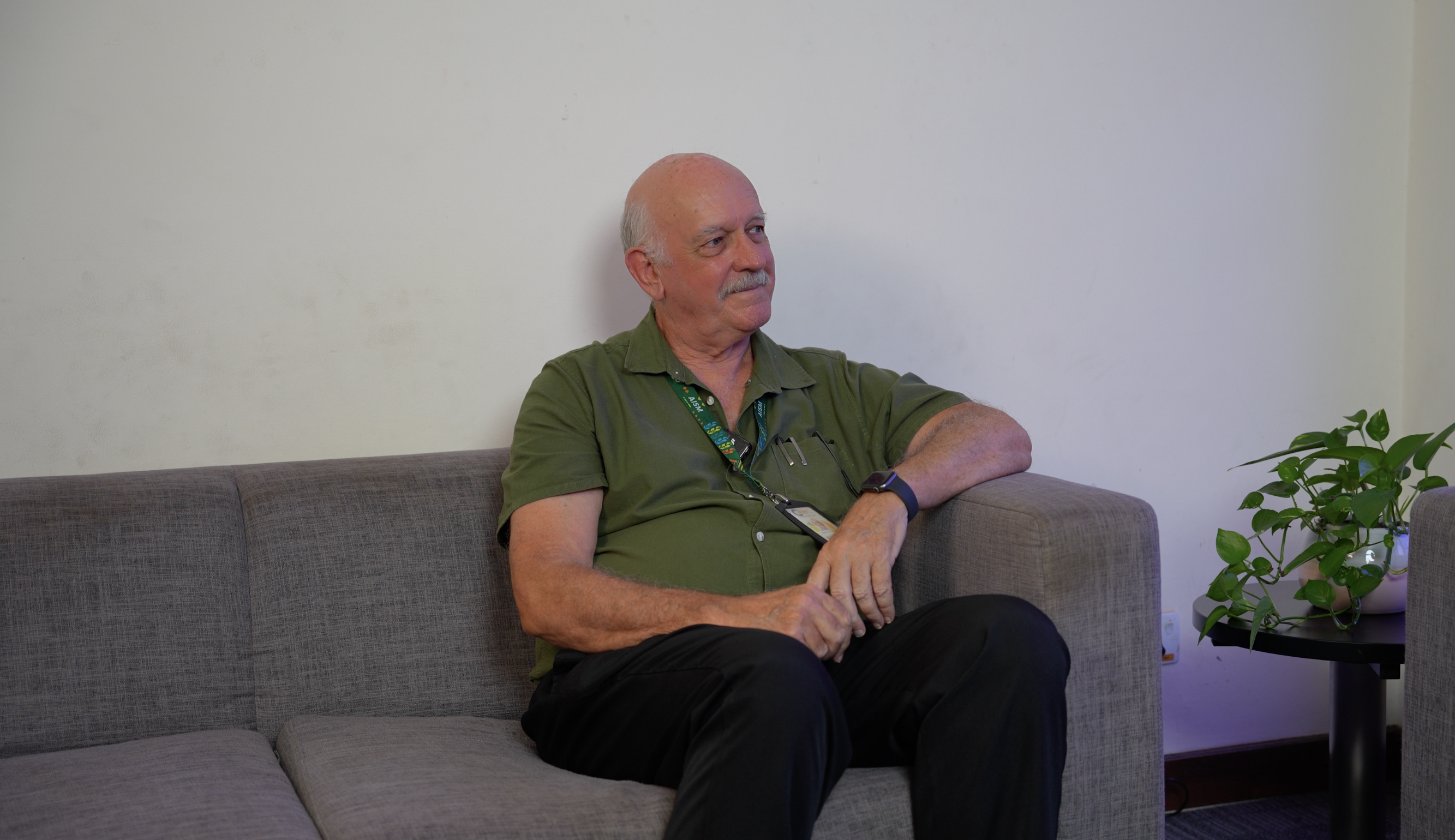
Ray Pollock, AISM teacher and parent to Aneesha Pollock, AISM Graduate from the Class of 2025.
Head of English, David Stagg, describes the HSC as a holistic curriculum. He highlights the importance of not restricting students to a single stream of knowledge. “It's quite common for us to have students who study chemistry, but will also take visual arts or drama or music,” he says. This broad mix trains them to think across multiple disciplines, helping them become more versatile.
While it may be draining, exploring different subjects and managing extracurricular responsibilities, AISM ensures that students are never left to struggle alone. Mr Stagg believes that one of the most valuable habits the HSC nurtures is help-seeking. Many students in other systems feel afraid to ask questions, but at AISM, teachers encourage them to bring drafts, discuss ideas, and ask, “Where can I go from here?” Learning becomes a collaborative process rather than an isolating one.
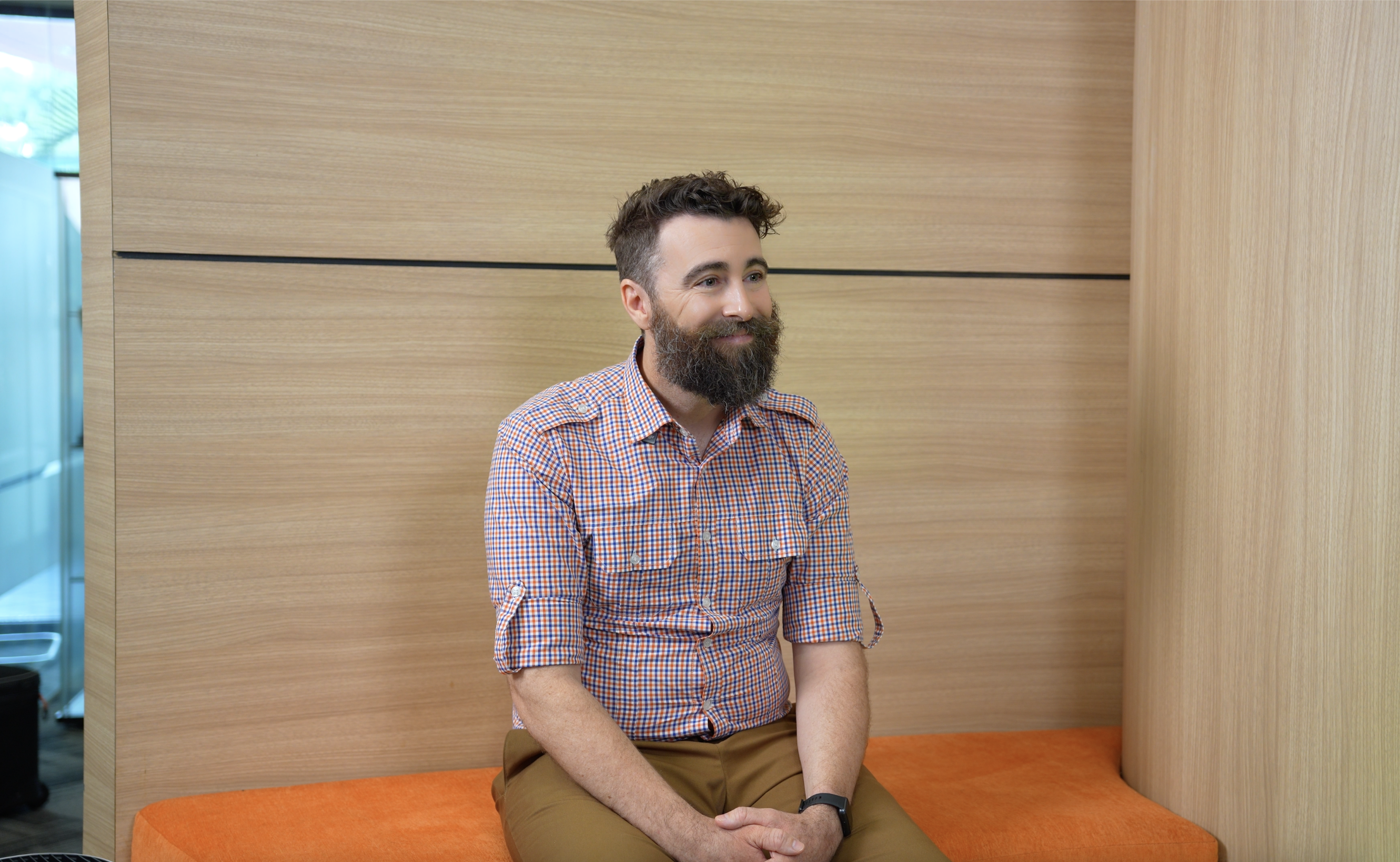
David Stagg, Head of English at AISM and Year 11 and 12 Advanced and Extension English teacher.
In the end, what sets AISM apart is the way teachers walk beside their students, not ahead of them. That closeness turns learning into something empowering, reminding students that they are never navigating their journey alone.
What Happens When Learning Becomes Hands-On and Human
Some schools are defined by their test scores.
But AISM is defined by its students’ stories.
Every project is more than just an assignment. It’s a step towards discovering who they are. Each student learns that unwavering support from teachers is what helps them rise, time and time again. AISM graduates leave with more than knowledge. They understand the power of collaboration, iteration, and how to present their ideas with confidence. They also know how to get back up when things don't go as planned.
It’s the experiences they’ve had here that make them adaptable, versatile, and ready for anything.
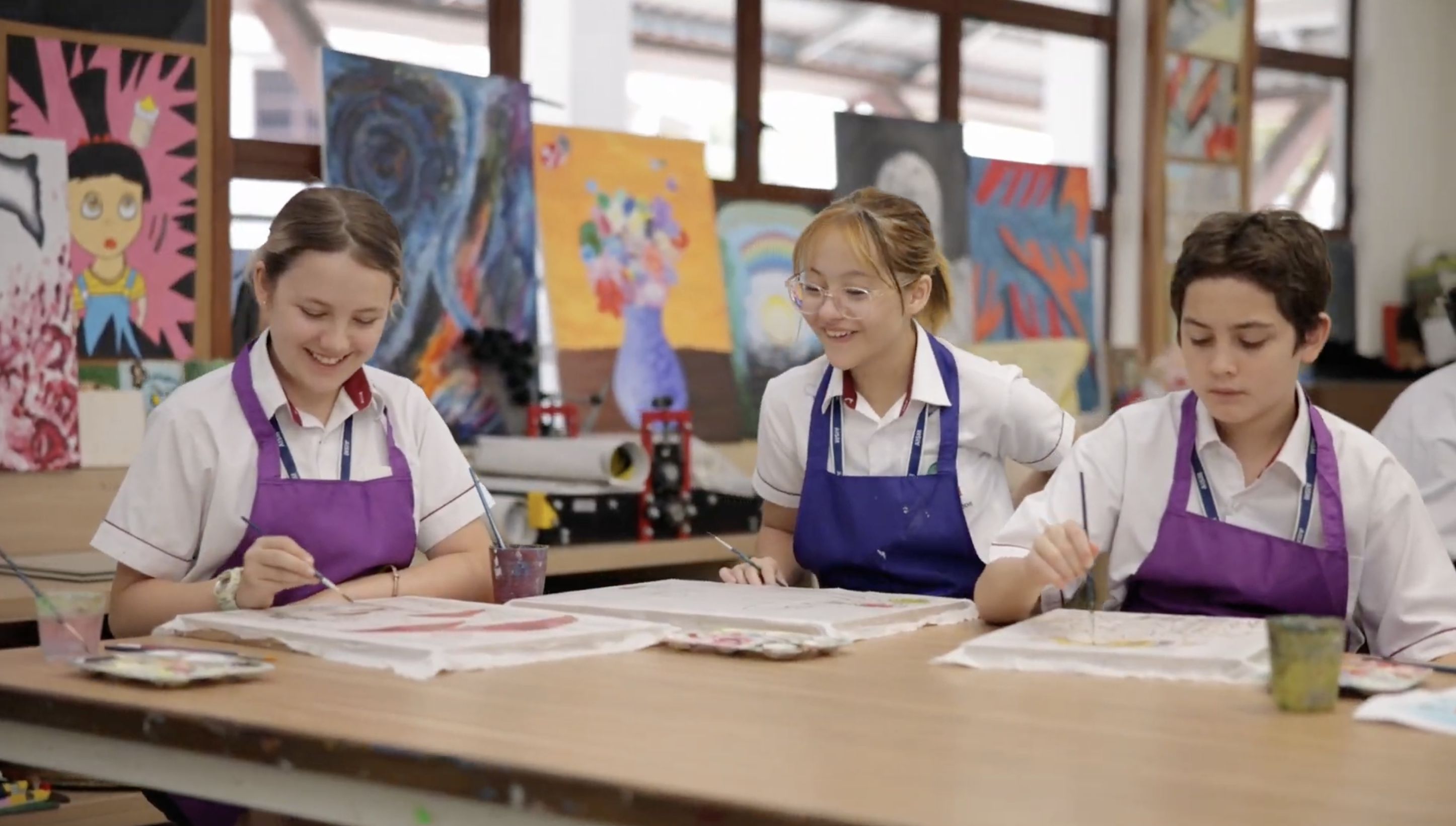
AISM is where students are nurtured to explore their creativity, passions, and dreams.
This school doesn’t wait for creativity to appear. It sparks it. Encouraging experimentation and honesty, AISM provides the space to create something meaningful. Whether it’s a performance, a design, a history exhibition, or a younger student’s newfound passion for photography, every project holds purpose.
At AISM, young people are given the freedom to imagine, work, and reflect. They grow into thinkers who believe they can shape the world. And more often than not, they do.
To enrol for Term 1 (2026 academic year) in January, book a tour now to enjoy a 100% application fee rebate and a 50% admissions fee waiver worth more than RM11,000. Let your child grow in a nurturing environment like AISM.
Recent Articles
- Hidden Fees at Budget International Schools in Malaysia: What Tuition Does Not Cover
- Is Preschool Compulsory in Malaysia? What the 13MP Proposes
- International Schools in Klang Valley With Tuition Fees Below RM30,000 in 2026
- Affordable International Schools in Malaysia With Tuition Fees Under RM30,000 in 2026
- Is Malaysia Falling Behind Its ASEAN Neighbours in PISA 2025?